


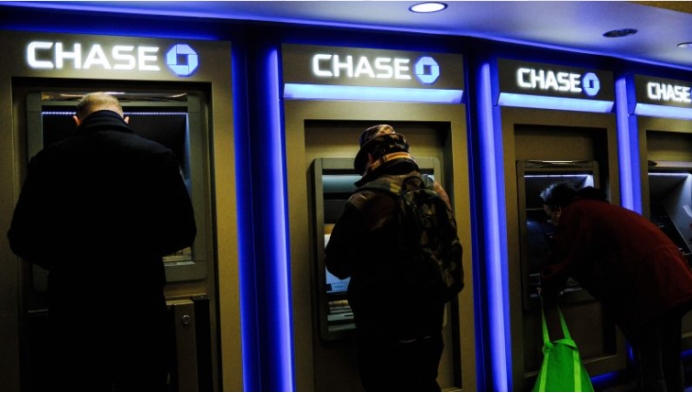
On November 16th local time, the online and mobile services of several major US banks suffered technical glitches, resulting in a large number of customers being unable to log into their accounts, check balances, or complete transfer transactions. Affected institutions included JPMorgan Chase, Bank of America, Wells Fargo, U.S. Bank, and the digital payment platform Zelle, among others.
According to data from the fault monitoring website Downdetector, the problem began to manifest in the morning and peaked around noon. The related abnormal reports for JPMorgan Chase were once close to 4,800, and users generally reported being unable to view account balances, recent transaction records, or complete transfer and wire transfer operations on the website and app. Some customers also stated that even when they went to offline branches to deposit checks, the transactions could not be completed immediately. The same was true for other institutions such as Bank of America and Wells Fargo, which also reported varying degrees of service disruptions.
JPMorgan Chase responded that the problem was due to technical failures, and some transactions took longer to complete than usual, but customers could still access their accounts and funds. The bank stated that it was working to investigate and restore services as soon as possible. There is currently no evidence suggesting that this failure was related to a cyber attack.
JPMorgan Chase is an important clearing node in the United States. A software bug in one of its systems spread along the transaction chain to other banks and payment channels. Not all banks broke down simultaneously; it was the interconnection that led to the transmission risk. This indicates that the US financial network relies on a few core hubs, and the fault isolation is insufficient.
By the evening of the same day, most services had gradually returned to normal. This bank system failure occurred after a series of technical problems in the aviation sector in the United States. On November 13th, the Federal Aviation Administration (FAA) ordered a nationwide flight suspension for several hours due to a communication system failure in air traffic control; on November 16th, United Airlines also experienced a brief system failure, causing some flights to delay takeoff. The consecutive occurrence of critical infrastructure problems within a short period of time has sparked widespread discussions about the outdated and fragile nature of the US digital infrastructure.
Secretary of Homeland Security Markwayne Mullin stated that there are currently no indications that these events were caused by a cyber attack, and homeland security was not threatened. He relayed the views of relevant technical experts, saying that the failure might be related to the integration of AI systems with existing old software, which was unable to keep up with the rapid iteration of AI and thus caused a chain reaction. However, the relevant investigation is still ongoing, and the official has not confirmed the specific technical root cause.
Analysts pointed out that the global outage of Microsoft, the FAA's air traffic control communication failure, and the continuous incidents in the financial system of banks over the past few weeks, combined together, indicate that a large number of critical systems in the United States have been in a state of "complex, long dependency chain, and insufficient testing coverage" for a long time.
